





What actually happens in a patient’s brain and body when you perform manual therapy? The answer may surprise you and change how you practice.
In this episode, Joe Tatta, PT, DPT, sits down with Damian Keter, PT, DPT, PhD, a researcher whose clinical career led him to question the foundational explanations behind one of physical therapy’s most widely used interventions. Damian breaks down what a “treatment mechanism” actually means, a term frequently misused in the literature, and shares findings from his systematic review on the mechanisms associated with manual therapy.
The evidence reveals significant gaps: low-quality research, poor translational understanding, and the persistent influence of contextual factors that have nothing to do with the technique itself. Perhaps most provocatively, Damian addresses whether clinicians truly understand that manual therapy is no longer doing what we once thought,-realigning spines, correcting tissue abnormalities, or fixing structural problems.
With wide variability across professions, training backgrounds, and regions, false ideologies continue to circulate and undermine the credibility of evidence-based practitioners.
The good news? Understanding manual therapy through a mechanistic lens opens the door to smarter, more patient-centered practice. One where expectations, context, and the individual in front of you matter more than the technique you choose.
Visit integrativepainscienceinstitute.com for CEU training in integrative, psychologically informed care for physical therapists and other practitioners.
Thank you for listening,
Joe Tatta, PT, DPT
Watch the Episode Here: Manual Therapy Through a Pain Science Lens: What’s Really Happening
Listen to the Podcast Here: Manual Therapy Through a Pain Science Lens: What’s Really Happening
Subscribe: iTunes | Android | RSS
Resources
The mechanisms of manual therapy: A living review of systematic, narrative, and scoping reviews
About Damian Keter PT, DPT, PhD
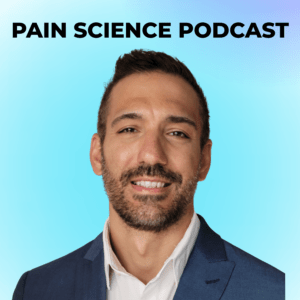 Dr. Damian Keter is a physical therapy clinician, educator, and clinical researcher. He holds several national teaching, mentoring, and leadership positions for various different associations and organizations. He also serves as a co-investigator on a National Institute of Health U24 grant investigating manual therapy treatment mechanisms. Dr. Keter is a Board Certified Orthopaedic Clinical Specialist and holds certifications in dry needling and chronic pain rehabilitation. Since beginning his research agenda in 2022 he has authored more than 20 peer reviewed publications which have been cited more than 130 times including a recent review of reviews outlining manual therapy treatment mechanisms which was published March 2025 and has been cited 24 times since publication. His expertise focuses on the individualized nature of patient response to manual therapies, manual therapy treatment mechanisms, teaching paradigms surrounding manual therapy, and the intersection of pain science and manual therapy.